
Find Missouri Property Tax Records
Missouri property tax records are kept by county collectors and assessors in all 114 counties across the state. These records show assessed values, tax bills, and payment history for real estate and personal property. You can search property tax records through your local county collector or use online tools to look up tax bills and check payment status. The Missouri State Tax Commission and the Department of Revenue both offer statewide resources for property tax information. Whether you need a current tax bill, a past payment receipt, or assessed value data, you can find the right office and tools on this page to start your search.
Missouri Property Tax Quick Facts
Search Missouri Property Tax Records Online
Most Missouri counties now have online portals where you can look up property tax records. These systems let you search by owner name, address, or parcel number. The county collector in each county runs the tax collection office and keeps records of all property tax payments. Many counties use third-party platforms like Public Access Now or Municipal Online Payments to handle online searches and payments. You can find your tax bill, print a receipt, or check if taxes are paid on a specific parcel. Some counties also let you pay online with a credit card, debit card, or electronic check, though processing fees apply in most cases.
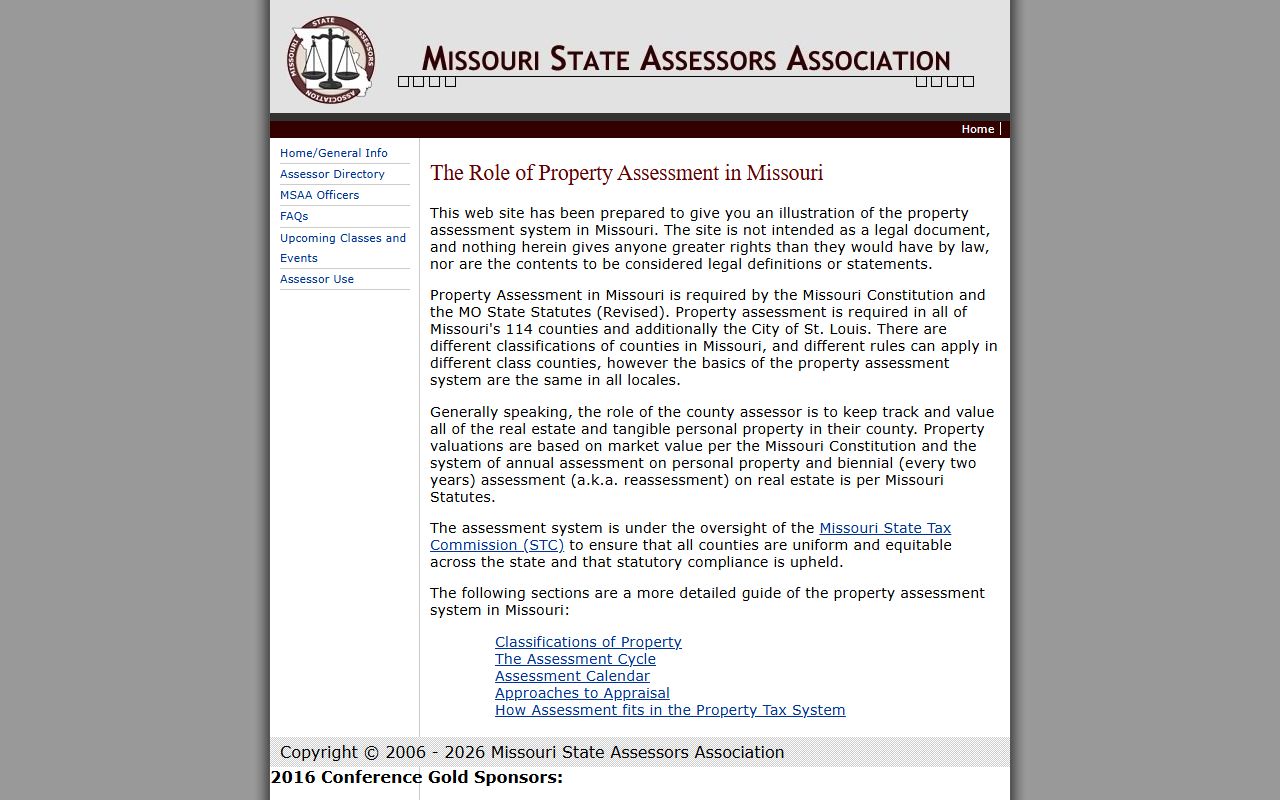
The Missouri State Assessors Association keeps a directory of county assessor offices with links to local property search tools. This is a good place to start if you are not sure which county handles your property tax records. Each county assessor has a portal where you can search real estate records and view assessment details.
Some counties also offer GIS mapping tools. These let you click on a parcel and see tax data, assessed values, and owner information on a map. Counties like Andrew, Bollinger, and Chariton use Integrity GIS portals for this kind of search.
Missouri Property Tax Assessment Process
Property tax in Missouri starts with an assessment. The county assessor determines the market value of every parcel of real estate and all taxable personal property. Assessment happens as of January 1 each year. Real property gets reassessed every two years in odd-numbered years. The assessor uses sales data, cost estimates, and income analysis to set market values. Once the market value is set, the assessed value is calculated using state rates defined in RSMo 137.115.
Missouri sets different assessment rates by property type. Residential real estate is assessed at 19% of market value. Commercial property is assessed at 32%. Agricultural land uses a 12% rate based on productivity value rather than market value. Personal property, which includes vehicles, boats, and equipment, is assessed at 33 1/3% of book value. These rates are set by state law and apply in every county. The county clerk then applies local tax levy rates to the assessed value to calculate the amount you owe. Tax levies vary from one taxing district to another, so two properties with the same assessed value in different parts of a county may have different tax bills.
Personal property declarations are due by March 1 each year. If you miss this deadline, you face a late penalty of $15 to $105 depending on the value of your property, as set by RSMo 137.280. New residents must contact the county assessor to set up an account. You still owe taxes in your prior county if you lived there on January 1.
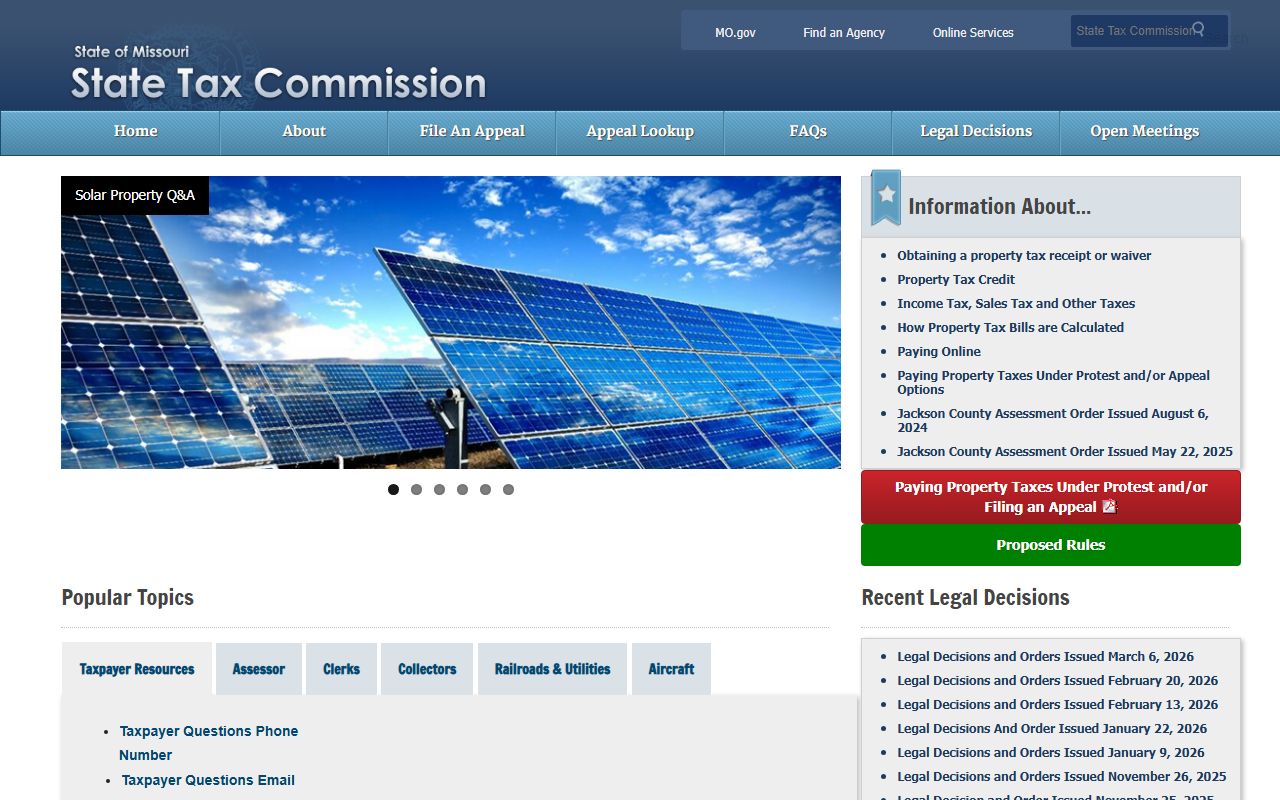
The Missouri State Tax Commission oversees assessors statewide and handles assessment appeals beyond the county level. They also publish forms and guides for taxpayers.
Paying Missouri Property Taxes
County collectors mail tax statements in late October or November each year. Your bill is due by December 31. If you miss the deadline, interest and penalties start on January 1 of the next year. Most counties accept payments by mail, in person at the courthouse, or through an online payment portal. Some counties have drop boxes at the courthouse for after-hours payments. The postmark date on a mailed check determines whether your payment is on time.
Many Missouri counties now accept online payments through their websites. Processing fees vary by payment method. A typical setup charges a flat $2.00 fee plus 2.75% for credit or debit cards, or a smaller fee for electronic checks. The county does not keep these fees. They go to the payment processing vendor. Counties like Jackson County use Public Access Now while others use Municipal Online Payments or their own portals.
Note: An online payment receipt is not the same as an official paid tax receipt for vehicle registration purposes in Missouri.
Property Tax Credits in Missouri
Missouri offers a Property Tax Credit for senior citizens and 100% disabled individuals. You can file a claim through the Missouri Department of Revenue. The maximum credit is $1,100 for homeowners and $750 for renters. You file this claim with your state income tax return or separately if you do not owe income tax. The credit is based on your total household income and the property taxes you paid during the year.
Several counties have also started offering the Senior Real Estate Tax Credit under SB 190. This is a separate program from the state credit. It freezes a portion of your property tax bill once you qualify. Each county sets its own application window. Daviess County, for example, accepts applications from May 1 through June 30. Dent County also participates with applications due by June 30. Check with your county collector to see if this program is available where you live.
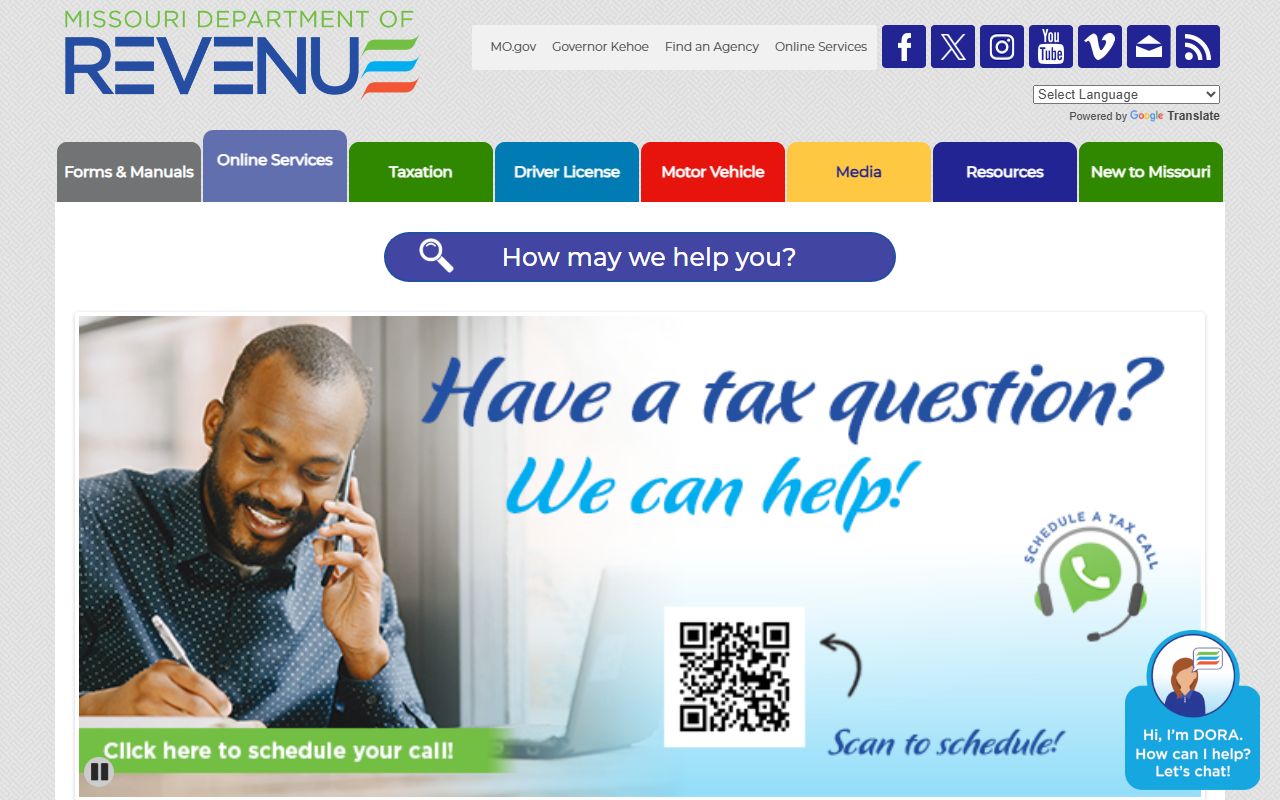
You can file your Property Tax Credit claim online through the Missouri DOR Online Services portal. You need your prior year tax receipt showing what you paid.
How to Appeal Missouri Property Tax Assessments
If you think your property is assessed too high, you can appeal. The first step is the local Board of Equalization. This board is made up of county commissioners and meets each year to hear assessment complaints. You need to file your appeal with the county clerk before the third Monday in June. Bring any evidence that supports a lower value, such as a recent appraisal, comparable sales data, or photos showing property condition issues.
If the Board of Equalization does not lower your assessment, you can take your case to the Missouri State Tax Commission. You must file this appeal by September 30 or within 30 days of the board's decision, whichever is later. The State Tax Commission holds formal hearings and can order the assessor to change the value. This process is free for residential properties. The commission has forms on its website that walk you through each step of the appeal.

The Missouri Association of Counties lists contact information for all county offices, including assessors and collectors. This is a good resource for finding the right office to start an appeal.
Missouri Property Tax Laws
Missouri property tax law is found in Chapters 137 through 141 of the Missouri Revised Statutes. RSMo 137.115 defines the assessment percentages for different property types. RSMo 139.031 sets the rules for when taxes are due and how delinquent taxes are handled. Chapter 140 covers tax sales, which happen when property taxes go unpaid for two or more years.
Tax sales in Missouri typically happen in August each year. The county collector offers delinquent real estate parcels at public auction. The buyer pays the back taxes and receives a certificate of purchase. The original owner has a redemption period to pay back the amount plus interest. If the property is not redeemed, the buyer can eventually get a collector's deed. Each county sets its own tax sale date. Some counties like Dade County hold their sale on the fourth Monday in August.
The state also has the Hancock Amendment in the Missouri Constitution. This limits how much a taxing entity can collect in property taxes without voter approval. If property values increase significantly during a reassessment year, the tax levy rate must roll back so total collections stay within the limit. This protects taxpayers from large tax increases caused by rising property values alone.
Get Copies of Missouri Property Tax Records
You can get copies of property tax records from the county collector or assessor in any Missouri county. Tax payment receipts are available from the collector. Assessment records, including property descriptions and valuations, come from the assessor. Most offices charge a small fee for copies. Some counties provide free access to records through their online portals.
For real estate transactions, you will often need a paid tax receipt showing all property taxes are current. Missouri law requires a personal property tax receipt or waiver before you can renew your vehicle registration plates. The county collector issues these receipts. You can usually get one in person the same day or request it by mail. Some collectors also post receipts on their online portals where you can print them yourself. If you need historical tax records going back several years, contact the collector's office directly. They may have archived records that are not available online.
Browse Missouri Property Tax Records by County
Each county in Missouri has a collector who handles property tax records. Pick a county below to find local contact details, online search tools, and payment options for that area.
Property Tax Records in Major Missouri Cities
Most Missouri cities do not collect property taxes directly. Your county collector handles tax bills and payments. Pick a city below for local property tax record details.